
By Olimatou Coker
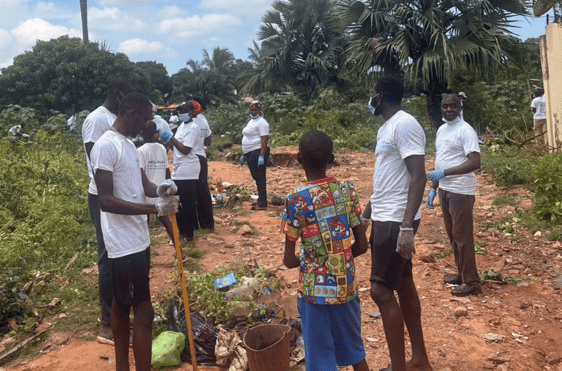
Conservation groups in Gunjur have launched an Ocean Waste Pyramid and carried out a mass beach cleaning at CETAG Turtle Village to remove deadly abandoned fishing nets from the coastline and turn waste into a tool for education.
The exercise was led by Gunjur Project Association in partnership with CETAG, Precious Plastic Gambia, Rise-Up Gambia* and 7 other partners. It is the 4th beach cleaning organised by Gunjur Project in 2026.
The Ocean Waste Pyramid is a permanent structure designed to collect; store and display ghost nets recovered from Gunjur beach. Instead of dumping the nets, the pyramid turns a marine threat into a public monument.
The initiative is delivered under the REDCENTROS – Interreg MAC 2021-2027 Circular Economy Fishing Nets Project, which targets the growing problem of discarded nets along the Gunjur coastline.
Jenny Ringstead, Co-founder of Gunjur Project, said ghost nets are washing ashore in huge quantities and trapping turtles, crabs and other marine life.
“These nets are a death trap. Animals get tangled and die,” Ringstead said.
Some nets can be recycled into football goals, plant pots and swings. But green fishing nets are the worst — full of metal, tangled, and costly to clean.
“Instead of moving the problem to a dumpsite, we built the pyramid to safely store the nets while we work with authorities and partners on a long-term recycling solution,” she added.
Ringstead also credited the Gunjur Village Development Committee for its support. “Waste management is a national challenge. Government cannot do it alone. Every community has a role to play.”
Lamin Jassey, Chairperson of CETAG, said the clean-up is part of CETAG’s duty to keep Turtle Village safe for nesting season and for the thousands of local and international visitors it receives.
“Ghost nets block turtles from nesting and kill marine wildlife,” Jassey said. “The pyramid will serve as an education point for students, fishermen, tourists and the community on the dangers of abandoned nets and proper disposal.”
Bubacarr Saho, Head of CETAG Turtle, said the sea feeds Gunjur families and must be protected.
“Ghost nets keep killing even after they are abandoned,” Saho said. “We built this pyramid to make people ask questions and understand the damage. Protecting the ocean is protecting our livelihood.”
CETAG is also implementing the Turtle Bycatch Project with Blue Ventures, working directly with fishermen to reduce turtle deaths and promote conservation.
Organisers said the pyramid and clean-ups are not a one-off.