
By Aminata Kuyateh
The Ministry of Health has launched a new Social and Behaviour Change Strategic Plan for immunisation, targeting the misinformation, access barriers and social norms keeping thousands of Gambian children from life-saving vaccines.
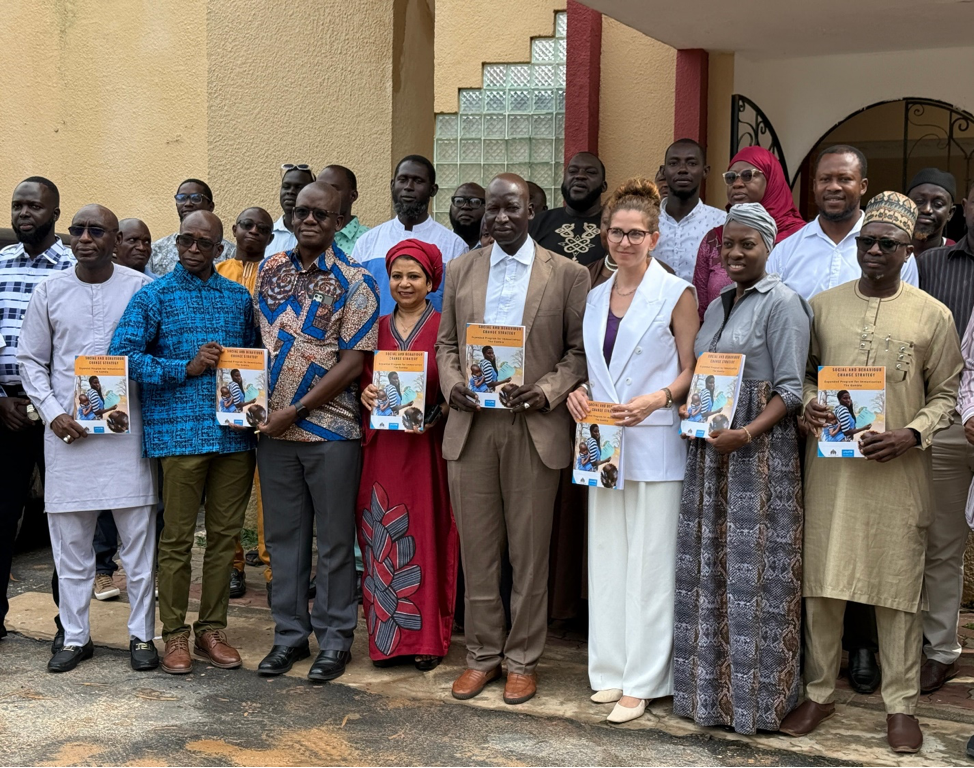
The plan was unveiled this week during a high-level meeting convened by the Expanded Programme on Immunization [EPI] with WHO, Unicef and Gavi. The meeting also reviewed The Gambia’s priorities and funding needs under Gavi 6.0 for 2026–2030.
Musa Camara, Deputy Director of Health Services, said EPI, established in 1979, remains one of The Gambia’s most successful public health programmes and a model in West Africa.
But progress has stalled. Fully immunised child coverage has held at about 83%, while DPT3 coverage dropped from 85% in 2022 to 80% in 2024.
Camara said the problem goes beyond vaccine supply. Children in hard-to-reach communities continue to be zero-dose or under-immunised due to misinformation, gender and social norms, demand-side barriers, and practical difficulties like distance and waiting times.
“The new strategy is evidence-based and caregiver-centred,” Camara said. “It directly addresses the reasons families are not vaccinating.”
Sidat Fofana, EPI Programme Manager, commended Gavi for a decade of support that has cut child mortality and strengthened health resilience. He said Gavi 6.0 offers new opportunities but will demand hard choices and prioritisation.
“We must use reliable, harmonised data to guide planning and make the necessary trade-offs,” Fofana said.
Dr Nathan Bakyaita, WHO Country Representative, called the timing critical as The Gambia prepares its Gavi 6.0 application. He urged strategic allocation of resources to routine immunisation and to closing coverage and equity gaps. He also pushed for better integration of health programmes, co-financing, and value for money.
Maria Padkina, Gavi Senior Country Manager, warned the next funding allocation will be lower than current levels. The Gambia has just over two months to submit its application.
“The focus must be on interventions with the greatest impact — especially reaching zero-dose children,” Padkina said. She said government accountability, sustainability and stronger coordination will determine success, and expressed hope The Gambia can eliminate zero-dose children within 1 to 2 years and reach 100% coverage.
Nafisa Binte Shafique, Unicef Country Representative, said Gavi 6.0 is a chance to redesign immunisation for changing population patterns, new vaccines and the spread of misinformation.
“Equity must remain central. We must find the children being missed and address the specific barriers they face,” Shafique said.
She called for tailored approaches: extended service hours and community-based clinics in urban areas, and stronger outreach in remote communities.
Shafique warned that communication alone will not solve zero-dose vaccination. “We must also fix distance, waiting times, inconvenient hours and concerns about service quality,” she said, urging government and civil society to implement the SBC strategy under one nationally owned framework.
The Ministry said implementation of the new strategy starts immediately as part of the push to meet Gavi 6.0 targets and protect every child in The Gambia.