
By Alhaji Kemo Conteh
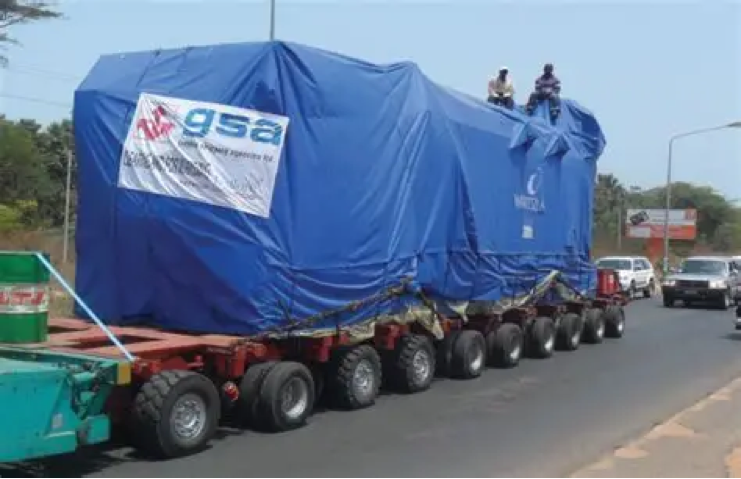
The bottom line up front is that the 21mw generator procurement is real. The generators arrived 5th October, 2026. Whether the purchase was legal or not, or whether the machines are brand new, refurbished or second hand, are separate questions. No politician, political actor or activist ruminating in unending and depthless analysis in social media accusing the government of baseless corruption and or lack of transparency in the transaction has tendered documents to prove their veracity.
They should stop posting to impress the public with false narratives and if they are so invested, let them file Access to Information requests to get the facts that the public deserves.
For those who care, here is a breakdown of what has been publicly verified in this matter.
Two 10.5mw generators, 21mw total, arrived at Banjul Port on 5th October, 2026, purchased from China. Nawec Managing Director Gallo Saidy said “the machines have never been used” and need only installation, with commissioning expected by end of October.
A third 10.5mw unit is reportedly en route. Vice President Muhammed Jallow stated the generators are part of the government’s “rapid response” to the power crisis that triggered protests since June. Saidy also stated the contract was “refinanced by the contractor”. That phrase is technically significant and legally loaded. It implies a financing arrangement, not a straightforward cash purchase.
The real compliance questions naysayers must then ask these questions:
(1) The GPPA approval: Thresh hold. Under the Gambia Public Procurement Authority (GPPA) Act 2014, any proposed contract valued at D1,000,000 and above must be submitted to GPPA for approval, along with the complete contract file. Two 10.5mw generators, even at conservative international pricing, far exceed this threshold. The compliance question therefore is: Did Nawec or the Ministry of Energy file for GPPA approval? If yes, under what procurement method, open tender, restricted tender, or single source? If single source, what statutory ground was invoked: emergency, proprietary, or otherwise?
(2) Single source justification: GPPA regulations permit single-source procurement only under narrow conditions, including genuine emergency where the situation threatens public safety and competitive bidding is impractical. The June 2026 power crisis created documented public hardship, hospital failures, business closures, protests. But the government took about four months to deliver these generators. The compliance question: Was the emergency continuous and unforeseeable, or was there sufficient time to run a competitive process? The procurement file must contain a written justification. If it does not, the legal basis for single sourcing collapses.
(3) The “refinanced by contractor” structure: VP Jallow and MD Saidy confirmed that the contract was “refinanced by the contractor”. This is therefore not a standard government cash purchase. It could mean: supplier credit, deferred payment, build-own-operate-transfer, or a hidden loan. The compliance question here then is: Is this a procurement contract or a financing agreement? If it is a financing arrangement, it falls outside
GPPA procurement rules into Ministry of Finance debt management rules, which have their own auditing procedures.
(4) Price benchmarking: Two 10.5mw diesel or heavy fuel oil generator sets have an international price range. The compliance question is not “does it look expensive” but “what was the contract price per mega watt compared to alternative suppliers and alternative technologies.” Without the contract value, no price-based corruption claim can stand.
(5) The audit trail already exists: The National Audit Office’s 2025 report found that the Ministry of Finance vired D329,505,582 from the Contingency Fund for routine, predictable expenses, not emergencies, without parliamentary approval. Although the same report found no gap analysis comparing the budget against IMF Public Investment Management recommendations, if the generators were funded through Contingency Fund virement or supplemental appropriation, mechanisms exist in government to checked these against the same patterns.
(6) What interested political pundits must obtain: They must stop playing on the minds of the unsuspecting public for political points. Inconsistent and baseless social media ranting will not cut it. To compile a consistent and coherent set of facts for genuine public consumptions, they must file for the details in a formal request under The Gambia Access to Information Act 2021. That law explicitly requires disclosure of all contracts, licenses, permits, authorisations and public-private partnerships.
My advice to interested politicians, political actors and activists is that they are fighting with slogans in social media against a government in a matter in which they (government) control the paper trail. That is a losing strategy. The Access to Information Act gives members of the public the right to demand these documents. The Information Commission has power to impose fines and issue binding orders to government officials. For fact-based public education, use it to feed your audience with the facts they need to help you in your fight against the government. If you file a request and are refused, that refusal itself is your evidence, and the burden then shifts to the government to justify the exemption. This is democracy at work and in The Gambia, it is the handiwork of President Adama Barrow.
This is a transparent government and I am sure they will not shy away from disclosing a procurement contract for “commercial confidentiality” when the contract is already executed and publicly celebrated at a port ceremony. If you obtain the documents and find violations, then you have a case. Not a Facebook case! A case that can go to the Ombudsman, the Information Commission, the National Assembly, or the courts. If you obtain the documents and they show compliance, then you owe the public a correction with your credibility dumped in the gutter in the face of the public you are trying so hard to impress.
These generators are in fact only a symptom of a bigger picture which is The Gambia’s public procurement system under this government. In pursuit of this important question, do not confuse “no public tender” with “corruption in government.” Emergency procurement is lawful when the legal conditions are met. Your job is to test whether those conditions existed and whether they were documented, not to assume they did not because you want to make the government look weak on the eve of crucial presidential elections
Alhaji Kemo Conteh is the founder and senior partner at Governance and Development Management Services, The Gambia